Quick answer
Septic tank pumping costs $400 to $600 for a typical Stephens Septic residential job in Marshall and Blount Counties. Tank capacity, buried lids, difficult access, multiple compartments, urgent symptoms, or added work can move a property-specific quote outside that range. These are Stephens Septic planning ranges reviewed August 20, 2026—not statewide averages or fixed offers.
The useful question is not only, “What is the average septic tank pumping cost?” It is, “What does that price include at my property?” A routine 1,000-gallon pump-out with an easy-to-reach lid is a different job from locating a buried tank, digging to the access point, or responding to sewage already backing into the house.
This guide uses Stephens Septic’s current North Alabama planning ranges and separates routine pumping from the conditions that create extra work. If your system is backing up, alarming, or sending wastewater to the surface, call for an assessment rather than treating a maintenance price as a repair quote.
How Tank Size Changes Septic Pumping Cost
Tank size is the best starting point because it affects how much material the truck must remove and haul. The table assumes a routine scheduled pump-out in the Stephens Septic service area. Access, condition, and added scope can change the result.
Swipe the table to see what to confirm
| Tank Size | How Size Affects Scope | What to Confirm |
|---|---|---|
| 750 gallons | Usually less material to remove | Confirm access, compartments, and solids condition |
| 1,000 gallons | Common residential reference size | Confirm the actual tank size from records when possible |
| 1,250 gallons | More volume than the common baseline | Confirm access and the number of compartments |
| 1,500 gallons | Larger residential service scope | Confirm truck access, hose distance, and lid depth |
| 2,000+ gallons | Quote requires system-specific review | Confirm capacity, property type, equipment fit, and route |
Do not know your tank size?
Check your installation permit, “Approval for Use,” or a prior pump receipt. The Alabama Department of Public Health says the completed permit may show the approximate system location and tank size. Your county health department can help property owners request available septic records.
What a Standard Pump-Out Covers
For the ranges above, a routine Stephens Septic pump-out means opening an accessible tank, removing the liquid and accumulated solids, and checking the visible solids level and baffles. The crew can then explain what was visible and give you a practical recommendation for the next service interval.
That is not the same as a formal real-estate inspection, a complete system diagnosis, or a repair. Filter cleaning, excavation, riser installation, damaged baffles, clogged lines, failed pumps, and drain-field problems may require separate scope. Ask what is included before comparing one company’s price with another.
7 Factors That Change Septic Pumping Cost
Two homes in the same town can receive different quotes because the crew is pricing the work at the property, not the ZIP code alone.
Tank size and actual volume
A larger tank holds more material, takes longer to service, and creates a larger disposal load. Tank size usually sets the starting range for a routine pump-out.
A buried or hard-to-find lid
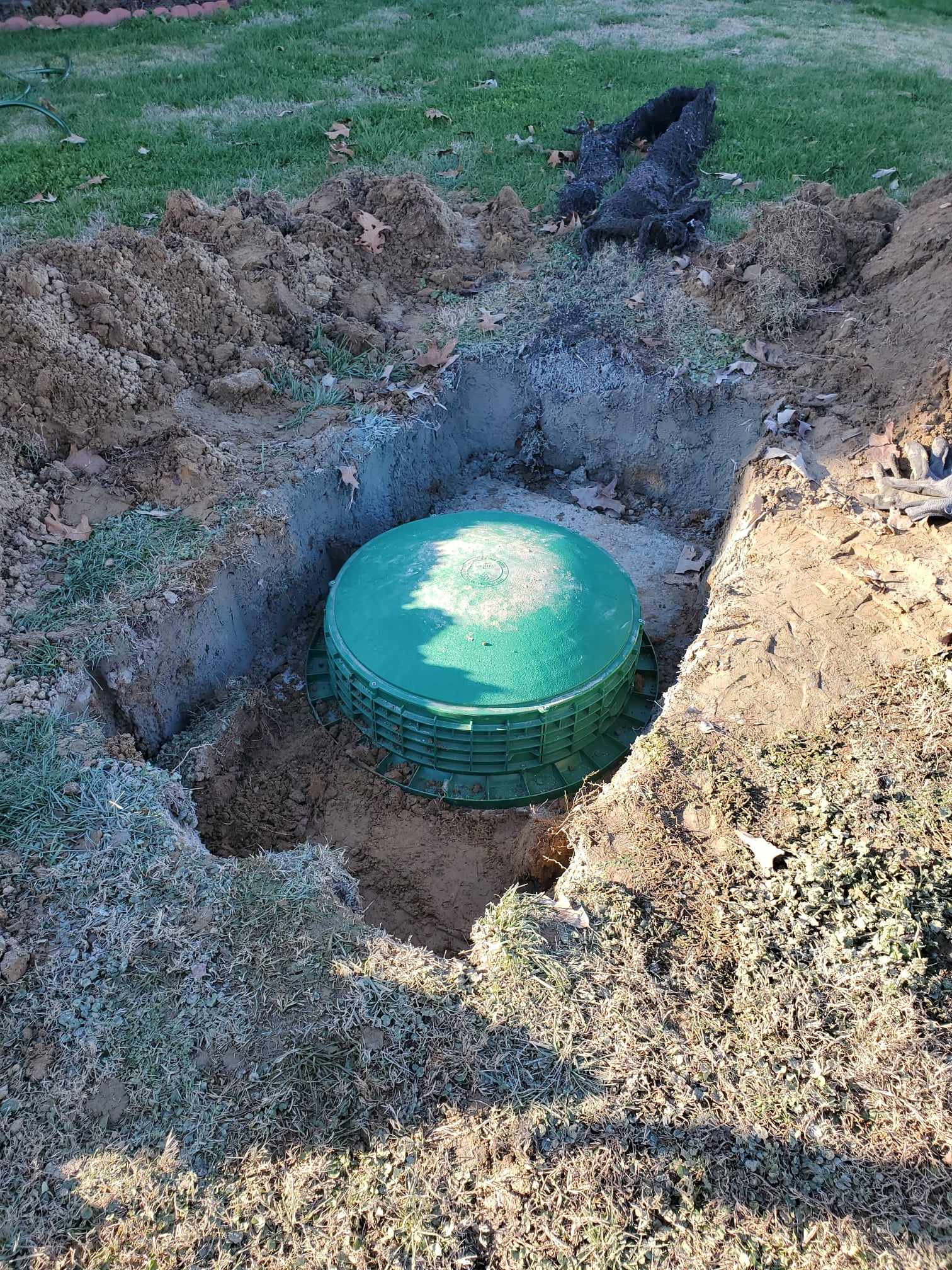
If the access lid is below grade or the system location is unknown, locating and exposing it adds work before pumping can begin. A riser at ground level can make future visits faster.
Truck access and hose distance
Soft ground, fences, steep grades, tight driveways, and a tank far from safe truck parking can change how the crew reaches the system and how long the job takes.
Time since the last pump-out
Long-overdue tanks can contain dense, compacted sludge that is slower to break up and remove than the material in a tank serviced on a regular schedule.
Multiple tanks or compartments
A two-compartment tank, a separate pump chamber, or more than one tank means more access points and more material to evaluate and remove.
Work beyond routine pumping
Filter cleaning, digging, riser work, baffle repair, line work, formal inspections, and repairs are separate scope. A pump-out price should not be treated as a repair estimate.
Urgent or after-hours service
When emergency or weekend service is available, an active sewage backup may cost more than a maintenance visit scheduled during normal hours.
How to Get a More Accurate Quote by Phone
Give the contractor enough information to price the same job you expect them to perform. Before you call, gather what you can from this list:
- Your city or road location, so the company can confirm coverage and travel requirements
- The tank size, if it appears on your permit or prior service record
- The date of the last pump-out, even if it is only an estimate
- Whether the lid is visible, covered by a riser, or buried
- Where a large pump truck can park without crossing the drain field
- Any current symptoms: slow drains, gurgling, odor, alarm, backup, or wet ground
You should also confirm that the pumper holds the required Alabama license. The state’s Alabama Onsite Wastewater Board roster lets homeowners search current license records.
Routine Pumping Cost vs. Waiting for a Problem
Pumping on a reasonable schedule is maintenance. Waiting for slow drains, sewage odor, wet ground, an alarm, or a backup turns the visit into troubleshooting—and possibly repair. Pumping may relieve a full tank, but it cannot restore a failed drain field or fix every damaged component.
The U.S. EPA says household tanks are typically pumped every three to five years. It also identifies household size, wastewater volume, solids volume, and tank size as the major variables. The Alabama Department of Public Health gives the same three-to-five-year cleaning guidance and recommends yearly inspection by a licensed contractor.
Those intervals are starting points, not promises. Heavy water use, a smaller tank, more people in the home, and garbage-disposal use can shorten the schedule. Keep the pump receipt and the crew’s solids measurements so the next recommendation is based on your system instead of a generic calendar.
Estimate Your Septic Service Cost
Choose the service and known tank size for a planning range. The result is not a binding quote; property access and the actual condition still need to be confirmed.
Septic Service Cost Estimator
Get an instant price range — no obligation, no spam.
Not sure? Use 1,000 gallons as a disclosed planning assumption.